


Can You Alienate a Child Without Ever Saying Anything Bad About the Other Parent?

A child does not need to hear the words “your dad doesn’t care” or “your mum is terrible” to receive the message.

Sometimes the message is quieter than that.
It can sit in a pause. A look. A change in tone. A phone call that never quite happens. A school event one parent only hears about afterwards. A weekend filled with activities that make contact feel like the thing standing in the way.
That is why subtle alienating behaviour can be so hard to name. Nothing obviously hostile may be said. There may be no shouting, no insults, no cruel comments for a court bundle. Yet over time, the child starts to learn that enjoying one parent causes discomfort in the other.
This article explores how subtle behaviours, routines and emotional reactions can gradually undermine a child’s relationship with a parent without a single openly negative word being said.
If you're an alienated parent or family member and need help with your situation then you should join PAPA today.
At PAPA we have several free to use support spaces, as well as several additional resources available to our Plus members, such as courses, PAPA AI, 1-2-1 help and workshops on family law and mental health.
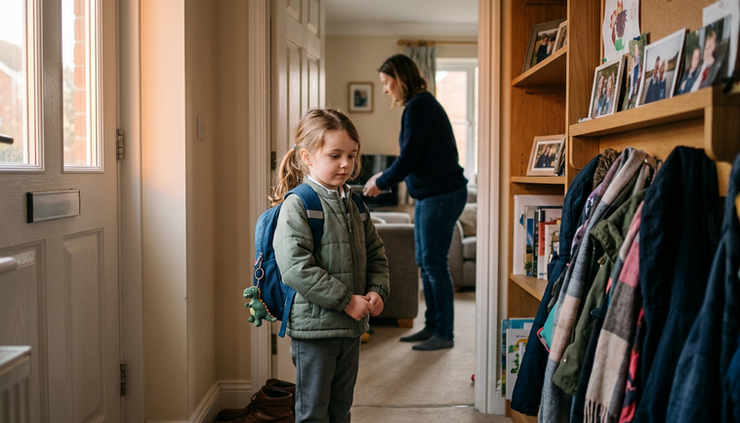
Silence can send a powerful message.
Parental alienation is often discussed as if it always involves clear verbal attacks.
Sometimes it does. A parent may openly tell a child that the other parent is unsafe, selfish, uncaring or to blame for everything. That is easier to identify because the words are there.
But children are not only listening to words. They are watching faces. They are reading mood. They are noticing which topics make the room tense.
A child might come home and say:
“We had such a good time at Dad’s.”
The other parent does not criticise Dad. They do not say contact was wrong. They simply pause, look away, go quiet or become colder.
The child feels the shift.
Next time, the child says:
“It was okay.”
That answer causes less discomfort. It keeps the peace. Over time, the child may stop sharing anything positive about contact at all.
No bad words were spoken. Still, the child has learned something.
They have learned that happiness with one parent may hurt, anger or unsettle the other. A child who wants emotional safety may then start managing what they say. They may minimise enjoyment, hide affection or change their behaviour to protect the parent in front of them.
That is not because the child is manipulative. It is because children adapt. They are often very skilled at sensing emotional risk, especially after separation.
Information can stop flowing without open hostility.
Another subtle pattern is exclusion through information.
The school sends details of sports day. One parent attends. The other is never told.
A medical appointment happens. The outcome is not shared.
A birthday invitation arrives for a weekend when the child is due to be with the other parent. Plans are made before that parent is consulted. They find out later, when changing the arrangement is already framed as disappointing the child.
No one has said:
“You should not involve your other parent.”
But the effect can be the same. One parent is pushed further out of the child’s day-to-day life.
This matters because parenting is not only about big blocks of contact. It is also about knowing the small details:
What project is due at school
Which friend has invited the child over
Whether the child is anxious about a test
When the dentist appointment is
What costume is needed for non-uniform day
How the child felt after football trials or music practice
When one parent is repeatedly left out of ordinary information, they can start to look distant or uninvolved. The child may think:
“They didn’t come.” “They didn’t know.” “They didn’t ask.”
The missing context is that they were not told.
This is one way a parent can alienate a child without using insults. The child’s experience is shaped by absence, and that absence may have been created.

Scheduling can make contact feel like a loss.
Children need routines, friendships, hobbies and fun. Separated parents also need to support a child’s wider life. The problem comes when scheduling repeatedly places one parent’s time in competition with everything the child enjoys.
Football is booked every Saturday morning during Dad’s contact.
A sleepover is arranged during Mum’s weekend.
A club, party or family outing is repeatedly placed across the same contact time.
Then the question comes:
“Do you really want to miss it just to go there?”
On paper, the child has a choice. In reality, it may not feel like one.
The child may feel they are choosing between a parent and their social life. Between contact and disappointing friends. Between going to the other home and missing the activity everyone else is excited about.
Over time, the other parent’s time becomes linked with sacrifice.
The issue is not a one-off clash. Life happens. Parties fall on weekends. Fixtures change. Family events come up. Sensible co-parents find ways to manage that.
The concern is the repeated pattern. If contact is constantly treated as the obstacle, the child may begin to see it that way too.
A healthier approach is to avoid making the child carry the emotional weight of adult scheduling. Parents can say:
“You have football on Saturday. Let’s speak to your other parent and work out how we can manage it.”
That is very different from:
“You’ll have to miss football because it’s their weekend.” “You’ll have to miss seeing them because football matters to you.”
The first response protects both the child’s activities and the child’s relationship. The second turns one into a threat to the other.
Contact can be made to feel inconvenient.
Subtle obstruction can also happen through calls and messages.
Dad calls at 7pm.
The child is told:
“You’re just about to get in the bath.”
Mum sends a message.
The reply is:
“They’re busy right now.”
That may be true once. It may even be true several times. Children do have baths, homework, meals, clubs and tired evenings.
But if every call comes at the wrong time, and every message is delayed, filtered or ignored, the pattern becomes hard to dismiss.
The child may not hear:
“Do not speak to your other parent.”
What they experience is:
Calls feel disruptive
Replies become difficult
The other parent seems less present
Communication slowly fades
No one openly says why
The parent trying to call may begin to look inconsistent, even if they are trying regularly. The child may think the relationship is naturally weakening, when access to communication is being controlled.
There is also a more emotional version of this pattern. A child may be allowed to speak, but only while being watched, corrected or hurried.
A call on speakerphone in a tense room does not feel private. A child who senses disapproval may give short answers. They may avoid warmth. They may say what feels safe.
That is why the quality of communication matters as much as whether it technically happens.

Alienated children notice what gets rewarded.
Children often learn through emotional feedback.
They notice what makes a parent soften. They notice what makes a parent withdraw. They notice which words bring warmth, and which ones make the room feel unsafe.
A child says:
“I miss Mum.”
The parent becomes tense, quiet or upset.
Later, the child says:
“I don’t want to go this weekend.”
The same parent becomes warm, attentive and reassuring.
The child may not consciously think, “I should reject Mum to receive comfort.” But they may begin to associate rejection with safety and approval.
This is one of the most painful parts of subtle alienating behaviour. The child’s words may start to look like their own settled view. They may say they do not want to go. They may seem angry. They may appear cold towards the other parent.
Sometimes those feelings are genuine and need careful attention. Children can have real worries, frustrations and preferences. Not every reluctance is caused by pressure.
But where a child’s rejection grows alongside repeated emotional rewards for distance, the wider context matters.
The question is not only:
“What is the child saying?”
It is also:
“What has the child learned it is safe to say?”
Handovers can create fear without an accusation.
Handovers are emotionally charged for many families. A parent may feel grief, anxiety or anger. A child may feel torn. Nobody handles every moment perfectly.
Still, repeated behaviour at handover can shape how a child feels about going.
A parent hugs the child tightly and holds on too long.
They look worried and ask:
“Are you sure you’re okay going?”
They say:
“Call me if anything happens.”
They repeat:
“You don’t have to go if you don’t want to.”
There may be no direct accusation. No one says the other home is dangerous. But the child may begin to wonder:
“Should I be scared?” “Is something going to happen?” “Am I upsetting this parent by leaving?”
The child may then become anxious before contact. Their anxiety is real, but it may have been created or intensified by the emotional build-up around leaving.
A calmer handover does not mean pretending everything is easy. It means giving the child permission to go without guilt.
Simple phrases can help:
“Have a lovely time. I’ll see you when you’re back.” “You can enjoy yourself. I’ll be okay.” “I love you, and I’m glad you get time with both homes.”
Those words matter because they release the child from looking after the adult’s emotions.
The pattern matters more than one incident.
None of these examples, on their own, automatically proves alienating behaviour.
Separated parents make mistakes. Messages get missed. Diaries clash. Children sometimes do not want to go. Parents sometimes feel anxious at handover. A single awkward reaction after a difficult day is not proof of a campaign.
The pattern is what matters.
A serious concern arises when repeated behaviour makes a child feel that loving, enjoying or maintaining a relationship with one parent creates emotional consequences with the other.
That pattern may include:
Positive comments about contact being met with silence or tension
School, medical or social information not being shared
Activities regularly arranged during contact time
Calls and messages repeatedly blocked, delayed or made uncomfortable
The child receiving warmth when they reject one parent
Handovers filled with anxiety, guilt or fear
The other parent being described indirectly as inconvenient, unsafe or unimportant
It is also vital to separate alienating behaviour from genuine safeguarding. If there are real concerns about abuse, neglect, substance misuse, harmful behaviour or risk, those concerns should be addressed properly. Raising safeguarding issues is not the same as alienation when it is done honestly, proportionately and with evidence.
The difficulty is that subtle patterns can be hard to explain. They may seem small when described one by one. Yet to the child, the repeated emotional lesson can be powerful.

How to respond without making things worse.
Subtle alienating behaviour is difficult to challenge because direct accusations can increase conflict. They can also give the other parent a chance to say the issue is bitterness rather than the child’s welfare.
A measured response is usually stronger.
Start by keeping a clear record. Focus on facts, dates and impact, not insults or assumptions.
For example:
“12 March, school emailed both parents about parents’ evening. I was removed from the reply chain and only found out after the appointment.”
“15 March, tried to call at agreed time of 7pm. Told child was busy. No return call offered.”
“22 March, child said they could not attend contact because a sleepover had been arranged. I was not consulted before the arrangement was made.”
This kind of record is more useful than writing:
“They are trying to destroy my relationship.”
“They never let me be a parent.”
“They are poisoning the child.”
Those feelings may be understandable. But in communication, especially where family court may become involved, calm detail carries more weight.
When you respond, keep the focus on the child:
“I support them attending football. Please can we agree how this will work without regularly replacing contact time?” “Please forward school and medical information when received so both parents can support them.” “If a call is not possible at the agreed time, please suggest an alternative the same evening.”
The aim is to show that you are child-focused, reasonable and willing to cooperate.
It also helps to protect the child from being pulled into adult conflict. Avoid asking the child to gather evidence, report conversations or challenge the other parent. That can increase pressure and loyalty conflict.
Sometimes the loudest message is never spoken.
A child can be influenced by what they repeatedly experience.
A face changing.
A happy story being met with silence.
A call being blocked.
A school event being hidden.
A weekend being filled with competing plans.
A handover that feels like a warning.
No single moment may look dramatic. But children build meaning from patterns. If the pattern teaches them that closeness with one parent causes distress in the other, they may adapt. They may withdraw. They may reject. They may say what keeps life calmer.
That is why subtle behaviour should not be ignored until the damage is obvious.
If you recognise this pattern, PAPA Plus gives members ongoing one-to-one case support, specialist resources, courses, PAPA AI and practical guidance around parental alienation and family court proceedings.
The earlier the pattern is identified, documented and addressed, the better the chance of protecting the child’s relationship with both parents. Small behaviours can do real damage when they repeat. They can also be challenged with patience, evidence and the right support.
In need of help or support?
If you are an alienated parent reading this article and feel you are in need of help and support then please make sure to join PAPA today by signing up here on our website.
This will give you access to our community support forum as well as our Resource Centre, which includes downloadable guides and on-demand courses to help through the process of being alienated and regaining contact with your children.
We also have our Facebook support group that you can join here.
Our Facebook support group has several dedicated chat rooms where you can get immediate support.
If you are a member of PAPA you can also send us a message here on the website and we will try to get back to you as soon as possible but please bear in mind, we have hundreds of messages weekly so it may take us a while to get back to you.
We are currently prioritising PAPA Plus members due to high demand.
Regardless of circumstance you are not alone and at PAPA we are here to support you.
Become a PAPA Ambassador
If you like our resources, articles and support networks and agree with what we stand for then why not get involved and help us push PAPA further by joining our Ambassador Program?
We would love for you to join us and help spread awareness for parental alienation and all of the dynamics involved so that we can continue to help parents and children towards a better future.
Our Ambassador Program allows you to grow your involvement with the cause by earning points on your membership.
To earn points we have created rewards for actions such as completing one of our courses, booking a case review, or ordering supply.
We will be adding new rewards and actions to our Ambassador Program as we continue to grow our awareness efforts.
We want our members to feel rewarded for their support as we continue to look for new ways to improve the lives of those impacted by parental alienation.
You can also become a PAPA Plus member, which will give you exclusive access to even more help and resources.
Each PAPA Plus membership makes a huge difference to the cause as it really helps us to improve our services and our awareness campaigns.
Proceeds from memberships and supply allow us to push the cause much further towards raising awareness and improving our services and resources so that we can continue to help more and more parents and children.
Thank you for reading and for your continued support of PAPA and our mission to end parental alienation.


Comments