


Exclusive Alliances in Parental Alienation: What It Means and Why It Matters.

A child should not have to choose which parent they are allowed to love.

In separated families, children may naturally feel closer to one parent at certain times.
They may prefer one household, share a hobby with one parent, or find one adult easier to talk to. That alone is not a problem. Healthy family relationships can be uneven, change over time, and still leave room for love in more than one direction.
An exclusive alliance is different. It develops when a child becomes intensely aligned with one parent while rejecting, fearing, or excluding the other. The child may feel that loyalty to one parent requires distance from the other. Affection starts to feel like betrayal.
This matters because, in some cases involving parental alienation, the alliance is not simply the child’s independent preference. It may be shaped by pressure, repeated negative messages, adult conflict, or interference with the other parent-child relationship.
This article is a powerful explanation of how exclusive alliances can pressure children into proving loyalty to one parent by rejecting the other.
If you're an alienated parent or family member and need help with your situation then you should join PAPA today.
At PAPA we have several free to use support spaces, as well as several additional resources available to our Plus members, such as courses, PAPA AI, 1-2-1 help and workshops on family law and mental health.
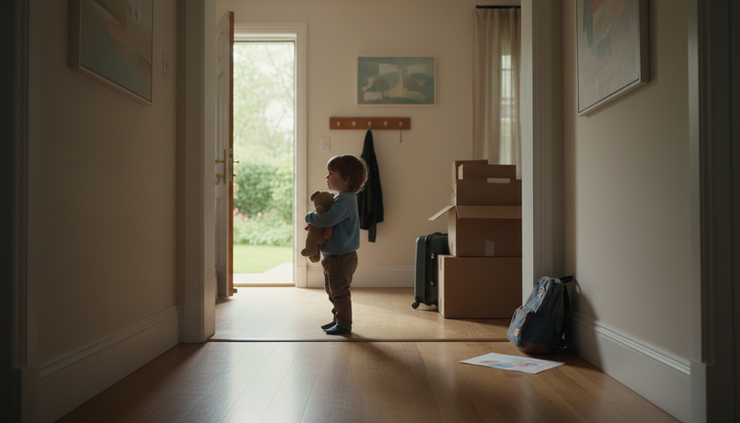
What an exclusive alliance means.
An exclusive alliance is a relationship pattern where a child’s bond with one parent becomes tied to the rejection of the other. The favoured parent may become the child’s emotional safe place, moral authority, and source of approval. The other parent may be seen as unsafe, bad, selfish, frightening, or unworthy of love.
The key feature is exclusivity. The child is not just close to one parent. The child appears to believe there is no acceptable space for a positive relationship with the other.
This can show up in statements such as:
“I hate them and never want to see them again.”
“They never cared about me.”
“Everything is their fault.”
“If I go, Mum will be upset.”
“If I enjoy time with Dad, I’m betraying Mum.”
Sometimes the words sound unusually adult. A child may repeat legal, financial, or relationship language they would not normally use. They may speak with certainty about matters they could not fully know. They may describe one parent as wholly good and the other as wholly bad.
That does not mean the child is lying. Children often believe what they say in these situations. The concern is that the belief may have been formed in an emotional environment where one answer was safer than another.
An exclusive attachment can feel protective to the child at first. It gives them a clear side to stand on. It reduces the stress of divided loyalties. Yet that relief comes at a cost, because the child loses the freedom to hold a full, complex view of both parents.
How a child gets pulled onto one side.
An exclusive alliance rarely appears from nowhere. It usually forms through repeated experiences that teach the child where their loyalty must sit.
This can be direct, but it can also be subtle. A parent does not always need to say, “Do not love them.” The child may learn the rule through mood, silence, tears, anger, or approval.
The child hears a steady negative story
One common route is repeated criticism of the other parent. The criticism may be open and constant, or it may appear in passing comments.
A child may hear that the other parent is unreliable, dangerous, selfish, controlling, or uncaring. They may be told about adult disputes, court issues, money worries, affairs, past arguments, or allegations they are not old enough to process.
Over time, the child may take on the favoured parent’s story as their own. They may come to see ordinary parenting mistakes as proof of bad character. A late pick-up, a forgotten item, or a different household rule may be treated as evidence that the rejected parent cannot be trusted.
The child becomes responsible for an adult’s feelings
Another route is emotional role reversal. The child begins to feel responsible for the favoured parent’s wellbeing.
They may notice that one parent becomes sad, angry, withdrawn, or anxious before or after contact. They may hear comments such as:
“I will be lonely without you.”
“I cannot believe you still want to go.”
“After everything they did to me, you are choosing them.”
“You are the only one who understands.”
The child may then decide that refusing contact is the way to protect the favoured parent. This can feel loving and heroic to the child, but it places an adult burden on them. They are no longer simply a son or daughter. They become a comforter, defender, or emotional partner.
The child is rewarded for rejection
Children are highly sensitive to approval. If rejecting one parent brings warmth, praise, closeness, or relief, the child may repeat it. If showing affection towards the other parent brings coldness, anger, tears, or withdrawal, the child may stop.
The reward does not have to be obvious. A parent might smile when the child complains about the other household. They might become more affectionate when the child refuses contact. They might treat the child as mature or loyal for taking their side.
Gradually, the child learns a painful lesson: closeness is safest when it is one-sided.

The child becomes part of the conflict.
When an exclusive alliance forms, the child can be drawn into roles that belong to adults.
They may become a confidant, hearing details about the separation or the other parent’s alleged failings. They may become a messenger, carrying emotional or practical information between households. They may become a protector, feeling they must defend the favoured parent from hurt. They may become a witness, expected to confirm one version of events.
These roles can make the child seem older, stronger, or more certain than they really are. Adults may mistake the child’s confidence for independence. Yet certainty is not always the same as freedom.
A child caught in this pattern may:
monitor the rejected parent for mistakes
report back on what happened during contact
refuse gifts, calls, or affection
use harsh language that mirrors an adult’s account
defend the favoured parent without question
show little guilt or sadness about cutting off the other parent
rewrite positive memories as false, forced, or meaningless
The rejection may look self-directed. The child may insist, “No one told me to say this.” That may be true in a narrow sense. Direct instruction is not always present. The wider emotional climate may still shape what the child feels able to think, say, and want.
This is why careful assessment matters. In discussions of parental alienation, an alienated parent and child may be described in simple terms, but real family situations need closer thought. The question is not only what the child says. It is also how the child came to that position, what pressures may exist, and whether the rejection fits the child’s lived experience.
Why the dynamic is harmful.
An exclusive alliance can be damaging because it asks a child to carry adult emotional weight.
Children need permission to love without managing adult pain. They need room to enjoy one parent without feeling they have wounded the other. They need adults to protect them from conflict, not recruit them into it.
When a child is pulled into an exclusive alliance, several harms can follow.
It encourages black-and-white thinking
Children in this position may learn that people must be all good or all bad. One parent is safe, loving, and truthful. The other is dangerous, selfish, and false.
That kind of thinking may reduce anxiety in the short term, because it makes the world feel simple. But family life is rarely simple. Most parents have strengths and weaknesses. Most relationships include good memories and painful moments.
A child who is encouraged to split parents into opposites may struggle later with balanced judgement. They may find it harder to tolerate mixed feelings, repair conflict, or accept that someone can disappoint them and still love them.
It can harm identity
A child is connected to both parents. This is not only practical. It is emotional, biological, cultural, and personal.
When a child is encouraged to reject one parent completely, they may also reject parts of themselves linked to that parent. This may include appearance, personality traits, family history, language, religion, culture, humour, interests, or memories.
A child may feel safer saying, “I am nothing like them.” But that statement can hide shame. If one parent is treated as wholly bad, the child may fear that the same badness exists in them too.
It weakens emotional security
Children need stable adult boundaries. They need to know that adults can cope with adult feelings. They should not have to protect a parent from sadness, anger, or loneliness.
In an exclusive alliance, the child may become hyper-alert to the favoured parent’s emotional state. They may watch facial expressions, tone, and silence. They may learn to adjust their own feelings to keep the adult steady.
That can create anxiety, guilt, and confusion. The child may appear loyal, but the loyalty may be driven by fear of what will happen if they step out of line.
Healthy parenting gives a child permission to have a relationship with both parents, unless there is a clear and evidenced reason why that would not be safe.

A close bond is not the same as alienation.
A strong bond with one parent is not automatically harmful. Many children have a primary attachment figure. Some children seek one parent more during illness, stress, adolescence, or major change. Some have shared interests or temperaments that make one relationship easier.
It is also true that children may resist contact for valid reasons. A child may feel frightened, hurt, ignored, or unsafe because of the rejected parent’s behaviour. There may be domestic abuse, neglect, substance misuse, harsh discipline, emotional unavailability, or other safeguarding concerns. In those cases, the child’s rejection may be understandable.
This is why labels must be used carefully. Calling a situation alienation without proper assessment can silence real concerns. Ignoring alienating behaviour can also leave a child trapped in pressure and loyalty conflict.
The task is to understand the child’s experience, not to force a child into contact at any cost or accept every rejection at face value.
A careful approach looks at:
what the child says and how they say it
whether the child’s account matches known events
how each parent talks about the other
whether the child is exposed to adult conflict
whether contact has been supported or disrupted
whether there are safeguarding concerns
how the child behaves before, during, and after time with each parent
whether the child can express mixed feelings
A child who says, “I love Dad, but I am angry with him,” is in a different emotional position from a child who says, “Dad is evil and there has never been anything good about him.” The second response may still reflect real pain, but it calls for careful enquiry.
What family professionals need to examine.
Family-justice guidance in England and Wales has increasingly stressed the need to investigate why a child resists or refuses a relationship with a parent. This means looking beyond labels and asking what is driving the rejection.
The cause may be alienating behaviour. It may be abuse or harm. It may be a realistic estrangement caused by the rejected parent’s own conduct. It may be a mixture of factors. Families are complex, and children can be affected by more than one truth at the same time.
Professionals should avoid simple assumptions such as:
The child refuses contact, so the favoured parent must be alienating them.
The child sounds confident, so the view must be fully independent.
One parent is distressed, so their account must be accurate.
The child refuses contact, so the rejected parent must have done something seriously wrong.
The child is young, so the view does not matter.
One parent is calm, so their account must be accurate.
Good assessment pays attention to patterns. It looks at the behaviour of both parents. It asks whether the child has been given emotional permission to love both. It also checks whether the child is safe, heard, and protected from adult conflict.
This article is for general information only. It is not legal advice, psychological advice, or a substitute for professional assessment in a specific family case.
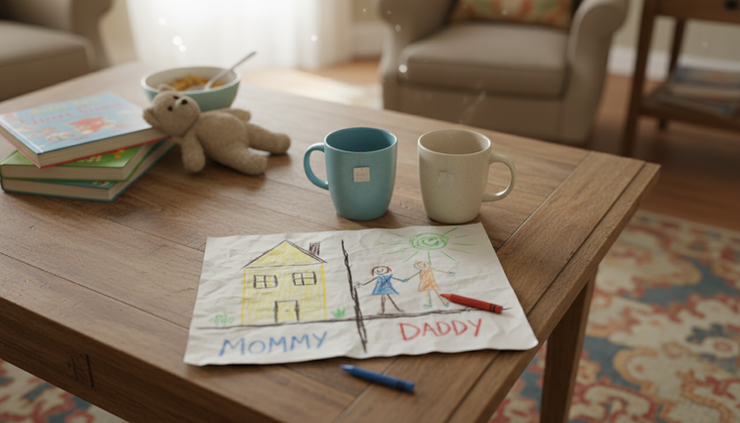
The healthier alternative is permission to love both parents.
The opposite of an exclusive alliance is not forced affection. It is emotional freedom.
A child should be able to say they miss one parent without comforting the other. They should be able to enjoy contact without being questioned as if they have betrayed someone. They should be able to hold ordinary complaints without those complaints being turned into evidence in an adult dispute.
Healthy separated parenting often sounds simple, even when it is hard to practise:
“You can love both of us.”
“You do not need to take sides.”
“Adult problems are for adults to sort out.”
“It is okay to have a good time there.”
“You can talk to me, but I will not ask you to carry this.”
These messages do not erase conflict. They protect the child from becoming the container for it.
When adults are hurt, frightened, or angry, it can feel tempting to seek loyalty from a child. The child may seem like the only person who understands. But children are not built to be emotional allies in adult separation. They need parents, not teammates in a dispute.
The central question is not whether a child is close to one parent. The question is whether that closeness requires the loss of the other.
Children should never have to prove love by rejecting someone else. When an adult encourages that division, the resulting bond may look strong from the outside. It may even look like devotion. But if it is built on pressure, fear, guilt, or the narrowing of a child’s emotional world, it is not a healthy alliance.
A child’s relationship with each parent should be allowed to stand on its own, shaped by safety, care, and real experience. Where there is no safeguarding reason to prevent it, the child should be free to keep both relationships without being made to choose a side.
In need of help or support?
If you are an alienated parent reading this article and feel you are in need of help and support then please make sure to join PAPA today by signing up here on our website.
This will give you access to our community support forum as well as our Resource Centre, which includes downloadable guides and on-demand courses to help through the process of being alienated and regaining contact with your children.
We also have our Facebook support group that you can join here.
Our Facebook support group has several dedicated chat rooms where you can get immediate support.
If you are a member of PAPA you can also send us a message here on the website and we will try to get back to you as soon as possible but please bear in mind, we have hundreds of messages weekly so it may take us a while to get back to you.
We are currently prioritising PAPA Plus members due to high demand.
Regardless of circumstance you are not alone and at PAPA we are here to support you.
Become a PAPA Ambassador.
If you like our resources, articles and support networks and agree with what we stand for then why not get involved and help us push PAPA further by joining our Ambassador Program?
We would love for you to join us and help spread awareness for parental alienation and all of the dynamics involved so that we can continue to help parents and children towards a better future.
Our Ambassador Program allows you to grow your involvement with the cause by earning points on your membership.
To earn points we have created rewards for actions such as completing one of our courses, booking a case review, or ordering supply.
We will be adding new rewards and actions to our Ambassador Program as we continue to grow our awareness efforts.
We want our members to feel rewarded for their support as we continue to look for new ways to improve the lives of those impacted by parental alienation.
You can also become a PAPA Plus member, which will give you exclusive access to even more help and resources.
Each PAPA Plus membership makes a huge difference to the cause as it really helps us to improve our services and our awareness campaigns.
Proceeds from memberships and supply allow us to push the cause much further towards raising awareness and improving our services and resources so that we can continue to help more and more parents and children.
Thank you for reading and for your continued support of PAPA and our mission to end parental alienation.



Comments