


What Do You Do When Nobody Understands What Parental Alienation Is Doing to You?

There is a particular kind of loneliness that comes from losing contact with a child while the rest of the world carries on as normal.

Your child is still alive. They may still be going to school, seeing friends, celebrating birthdays, growing taller, changing, living. But your place in their life may feel as though it is fading in front of you. That is a difficult kind of grief to explain, because there is no funeral, no public marker, no clear moment when people gather around and recognise the scale of the loss.
So instead, people often reach for simple phrases.
“Just give it time.”
“They’ll come back.”
“Try not to think about it.”
Those words may be meant kindly, but they can land painfully. When it is your child, you cannot simply switch off the worry. You cannot stop remembering their laugh, their routines, their favourite foods, their small habits, the ordinary moments that used to make up family life.
The pain of parental alienation is not only about missed contact. It can affect your identity, your confidence, your sleep, your relationships, and your ability to feel safe in your own life. When no one around you seems to understand that, the isolation can become almost as heavy as the separation itself.
This article is a supportive guide for alienated parents who feel isolated and misunderstood, showing why the right emotional and practical support can make a real difference.
If you're an alienated parent or family member and need help with your situation then you should join PAPA today.
At PAPA we have several free to use support spaces, as well as several additional resources available to our Plus members, such as courses, PAPA AI, 1-2-1 help and workshops on family law and mental health.

The grief can be hard to name.
Many people understand bereavement. They understand divorce. They understand family arguments. But alienation can sit somewhere between several kinds of loss, which makes it harder for others to grasp.
You may still have parental responsibility. You may still have photos, old messages, school reports, toys, clothes, drawings, or birthday cards. The bond may still feel alive inside you. Yet day-to-day parenting may have been taken away or severely restricted.
That creates a painful contradiction.
You are still a parent, but you may not be able to parent in the way you used to. You may still love your child deeply, but they may reject your calls, ignore your messages, or repeat things about you that feel untrue or distorted. You may still be trying to stay calm, patient, and loving, while inside you feel frightened and heartbroken.
This can make the grief feel invisible. Other people might see a parent who is stressed, angry, distracted, or withdrawn. They may not see the constant internal battle:
Wondering whether to send another message or stay quiet
Replaying the last conversation again and again
Worrying about what your child is being told
Thinking about birthdays, weekends, school events, and missed milestones
Feeling helpless while the relationship changes without your voice being heard
This is not ordinary sadness. It is a form of ongoing emotional strain. There may be no clear end point, and that uncertainty can keep the nervous system on high alert.
Parental Alienation can start to consume your identity.
When a child becomes distant or unreachable, many parents find that their whole life begins to orbit around the situation.
The phone becomes more than a phone. It becomes a possible connection, a possible rejection, a possible sign that something has changed. A delayed reply can affect the whole day. No reply can feel like a fresh wound.
Old photos may bring comfort one moment and unbearable pain the next. Messages may be read and reread, not because they contain new information, but because they are proof that the relationship existed. A parent may keep checking the time, remembering the school run, a bedtime routine, Saturday sport, Sunday lunch, or the small everyday rituals that once gave life structure.
This can affect more than mood. Over time, the strain may touch almost every part of life.
Sleep can become broken. Work can become harder to focus on. Conversations with friends can feel impossible because normal topics seem distant and unreal. New relationships may be affected by fear, anger, or exhaustion. Confidence can drop because alienation often makes parents question everything about themselves.
You may ask:
“Was I a good enough parent?”
“Should I have done something differently?”
“Will my child believe this forever?”
“Am I making things worse by trying?”
Those questions can become relentless. They can make the mind feel like a courtroom that never closes, with the same evidence examined again and again. That is draining, and it is not a sign of weakness. It is a sign that the relationship matters.

Feeling misunderstood makes the pain heavier.
Friends and relatives may care very much. They may want to help. But if they have never lived through this kind of loss, they may not understand why it dominates so much of your inner life.
To them, it might seem practical to say, “Give them space.” To you, that space may feel like another day of the bond weakening.
They might say, “Children grow up and make their own minds up.” You might hear, “Accept years of pain and hope it changes one day.”
They might say, “Try not to let it ruin your life.” You might think, “This is my child. How could it not affect my life?”
The problem is not always lack of love. Often, it is lack of understanding. People try to reduce the pain because they do not know how to sit beside it. They want to fix it with reassurance, optimism, or distraction. But some pain cannot be fixed by a sentence.
Alienated parents often need something different. They need space to say the things they are afraid to say elsewhere. They need to talk about the fear, shame, anger, longing, confusion, and exhaustion without being judged for it.
They need someone to understand that missing a child is not limited to special occasions. It can happen when passing a school uniform shop. It can happen in the cereal aisle. It can happen when another parent complains about having to drive to football practice, and you would give anything to have that ordinary inconvenience back.
That is one reason the isolation can feel so severe. The world keeps treating your loss as private, complicated, or uncomfortable, while you carry it everywhere.
You need support, not judgement.
When a parent is living through alienation, advice can sometimes feel like blame in disguise.
“Stay calm.”
“Do not react.”
“Keep records.”
“Think about the long term.”
Some of that advice may be useful in the right setting. But when someone is already overwhelmed, it can feel as though everyone is telling them to perform perfectly while their heart is breaking.
Support should not begin with criticism. It should begin with being heard.
That does not mean every feeling should be acted on. It does not mean every message should be sent, or every confrontation pursued. Strong support helps create enough steadiness to make better decisions. It gives you somewhere to pause before reacting. It helps you separate what you can control from what you cannot.
Good support can help you ask clearer questions.
What is the safest next step?
What does my child need from me right now?
How can I stay present without adding pressure?
What records or information matter?
How do I protect my mental health while this continues?
Who can help me think clearly when I feel overwhelmed?
Sometimes the first thing you need is not another legal document. Sometimes the first thing you need is a conversation with someone who understands the emotional reality of what is happening. Legal processes may matter, but a parent in crisis also needs human support, practical guidance, and space to breathe.

PAPA Plus offers a place to be understood.
When people around you do not understand what alienation is doing to you, specialist support can make a difference.
PAPA Plus is designed for parents who need more than general reassurance. Members can book one-to-one support and case calls with a team experienced in the realities of alienation. That matters because you should not have to spend the whole conversation explaining why this hurts so much before you can even begin to ask for help.
Support is not only about crisis moments. You do not need to wait until a court hearing is days away. You do not need to wait until you have stopped sleeping, lost confidence, or reached breaking point. Getting help earlier can make it easier to think, plan, and cope.
PAPA Plus members can also access practical resources, courses, mental health support, workshops, and PAPA AI. These tools can help you feel more informed and less alone, especially when you are trying to understand what has happened and what might come next.
That support can help in several ways.
It gives you somewhere to speak freely.
You can talk about the impact without feeling dismissed or told to “move on”.
It helps you organise your thoughts.
When stress is high, everything can feel urgent. A focused support call can help you sort through what needs attention now and what can wait.
It reminds you that your reactions make sense.
Feeling devastated, anxious, angry, or confused does not mean you are failing. It means you are responding to a deeply painful situation.
It helps you stay connected to yourself.
Alienation can shrink life down to one issue. Support can help you keep hold of your health, values, and steadiness while you continue trying to protect the relationship with your child.
You can care deeply without disappearing.
One of the hardest parts of alienation is learning how to keep loving your child without losing yourself completely.
That can feel almost impossible. Love pushes you to fight, wait, hope, explain, reach out, remember, and endure. But survival also asks you to rest, eat, work, connect with safe people, and allow moments where your whole mind is not consumed by the situation.
Taking care of yourself does not mean you care less. It means you are trying to remain strong enough to continue.
That might look very simple at first:
Sleeping at regular times where possible
Eating something even when your appetite is low
Speaking to one safe person instead of isolating completely
Writing thoughts down before sending messages
Setting small routines that bring structure to the day
Getting support before emotions become unmanageable
None of these steps erase the pain. They are not a replacement for contact with your child. But they can help stop the situation from taking every part of you.
There may be days when hope feels natural. There may be days when hope feels impossible. On both kinds of days, you still deserve support.
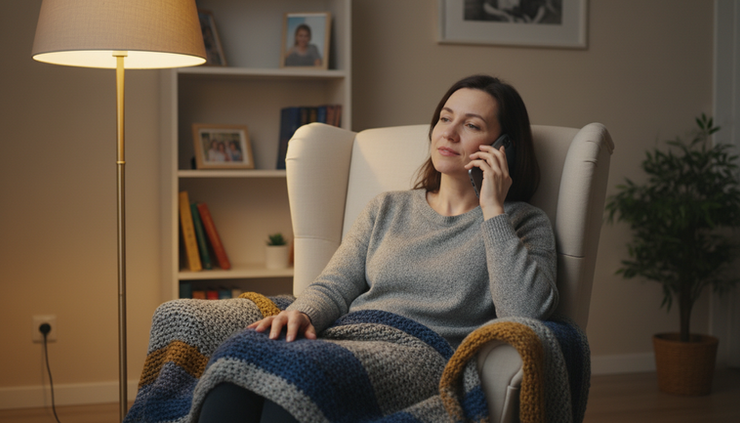
You do not have to be alone with this.
When no one understands what alienation is doing to you, it can start to feel as though you are carrying two losses at once. The distance from your child is painful enough. The lack of understanding around you can make it feel even more isolating.
You may be tired of explaining. You may be tired of staying calm. You may be tired of people offering simple answers to a situation that feels anything but simple.
You do not need to prove that this hurts. You do not need to wait until you are falling apart before asking for help. You do not need to have a court date in the diary to speak to someone who understands.
PAPA Plus offers support, resources, calls, workshops, mental health help, and tools for parents who are trying to make sense of alienation while still holding on to themselves.
You may feel separated from your child, but you do not have to become separated from support too.
Join PAPA Plus, book a call, and speak to people who understand why this hurts so much.
In need of help or support?
If you are an alienated parent reading this article and feel you are in need of help and support then please make sure to join PAPA today by signing up here on our website.
This will give you access to our community support forum as well as our Resource Centre, which includes downloadable guides and on-demand courses to help through the process of being alienated and regaining contact with your children.
We also have our Facebook support group that you can join here.
Our Facebook support group has several dedicated chat rooms where you can get immediate support.
If you are a member of PAPA you can also send us a message here on the website and we will try to get back to you as soon as possible but please bear in mind, we have hundreds of messages weekly so it may take us a while to get back to you.
We are currently prioritising PAPA Plus members due to high demand.
Regardless of circumstance you are not alone and at PAPA we are here to support you.
Become a PAPA Ambassador
If you like our resources, articles and support networks and agree with what we stand for then why not get involved and help us push PAPA further by joining our Ambassador Program?
We would love for you to join us and help spread awareness for parental alienation and all of the dynamics involved so that we can continue to help parents and children towards a better future.
Our Ambassador Program allows you to grow your involvement with the cause by earning points on your membership.
To earn points we have created rewards for actions such as completing one of our courses, booking a case review, or ordering supply.
We will be adding new rewards and actions to our Ambassador Program as we continue to grow our awareness efforts.
We want our members to feel rewarded for their support as we continue to look for new ways to improve the lives of those impacted by parental alienation.
You can also become a PAPA Plus member, which will give you exclusive access to even more help and resources.
Each PAPA Plus membership makes a huge difference to the cause as it really helps us to improve our services and our awareness campaigns.
Proceeds from memberships and supply allow us to push the cause much further towards raising awareness and improving our services and resources so that we can continue to help more and more parents and children.
Thank you for reading and for your continued support of PAPA and our mission to end parental alienation.


In the beginning, people would ask about my boys and I would say "they're fine". With a few people, we would begin to talk about more deeply, but I found that many (all of them really) just didn't understand what PA is and it was exhausting talking about it. Now I simply chose to avoid the conversation entirely. I gently guide the talk away from "the kids". PA is not my identity...I am more than the situation I find myself in. Yes, I write long letter to my boys, but never mail them. I do send cards on birthdays and Xmas, but no other contact because that it what they have chosen and I must honor that out of …