


What is the Difference Between Protecting a Child and Possessing Them?

A child can be kept safe without being made smaller.

They can be protected from harm without being taught to fear their own feelings. They can be guided, supported and loved without being treated as something one parent owns.
That is the line this issue comes down to.
Protection is about the child’s welfare. Possession is about an adult’s control. The two can look similar on the surface, especially when a parent uses the language of concern, safety or care. But the effect on the child is very different.
Real protection gives a child room to grow. Possessive parenting narrows their world until love, contact, memory and loyalty all need permission.
This article is a look at the crucial difference between genuinely protecting a child and controlling who they are allowed to love.
If you're an alienated parent or family member and need help with your situation then you should join PAPA today.
At PAPA we have several free to use support spaces, as well as several additional resources available to our Plus members, such as courses, PAPA AI, 1-2-1 help and workshops on family law and mental health.
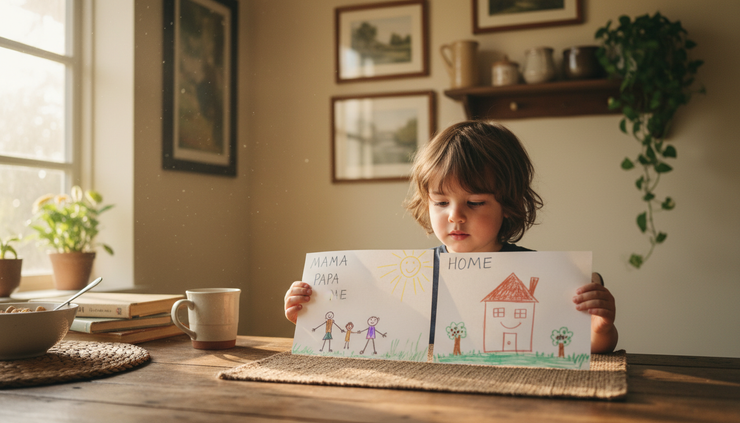
Protection keeps the child at the centre.
Protecting a child means noticing real risks and acting to reduce them. It may involve setting boundaries, supervising contact, seeking professional help or involving the right services when there are serious concerns.
At its best, protection says:
This child needs safety.
This child needs stability.
This child needs age-appropriate truth.
This child needs to form healthy relationships.
This child needs space to have their own feelings.
Protection does not require a child to erase people who are safe. It does not demand that they suppress affection, hide memories or perform loyalty to keep a parent calm.
A protected child can say, “I had a nice time,” without checking the room for danger. They can miss one parent while staying with the other. They can enjoy a birthday, a school play or a weekend visit without feeling they have betrayed someone.
That freedom matters. Children build identity through relationships. They learn who they are partly through being loved by others and loving others in return. When a parent controls that process for emotional reasons, the child loses more than contact. They lose the right to know their own heart.
Possession makes the child responsible for adult feelings.
Possessive parenting often presents itself as devotion. A parent may say they are the only person who truly understands the child. They may describe the other parent as unsafe, selfish or unworthy, even when there is no clear evidence of danger.
The child then learns that closeness with one parent may injure the other.
This can create a painful emotional bind. The child may start to monitor themselves. They may change their tone after contact. They may avoid mentioning happy moments. They may feel guilty for laughing, relaxing or feeling loved somewhere else.
That is not safety. That is pressure.
A child should not have to manage an adult’s jealousy, sadness or anger. They should not have to protect a parent from the reality that they also love someone else. When a child becomes responsible for keeping an adult emotionally steady, the parent-child relationship has been turned upside down.
The child may become an emotional ally rather than a child. They may be expected to agree with adult grievances, take sides in adult conflict or prove loyalty by rejecting the other parent. Over time, their own needs can become hard to name because the adult’s needs take up all the space.
A child is not a witness for the prosecution of an ex-partner. A child is not a prize. A child is not an extension of anyone’s hurt.
Love should never require permission.
One of the clearest warning signs is when affection becomes conditional.
A child may begin to believe:
“If I love Dad, Mum will be upset.”
“If I miss Mum, Dad will feel rejected.”
“If I enjoy contact, I should keep it quiet.”
“If I mention the other parent, there will be an argument.”
“If I do not agree, I am being disloyal.”
These beliefs can take root even without direct threats. Children are skilled readers of mood. They notice silence, tears, sharp questions, sarcasm and withdrawal. They learn what is safe to say and what will disturb the peace.
Sometimes the pressure is subtle. A parent may ask repeated questions after contact, searching for something negative. They may respond coldly when the child says they had fun. They may make sad remarks such as, “I suppose you prefer being there,” or “You always come back different.”
The child hears the message beneath the words. Love must be edited. Joy must be hidden. Loyalty must be proven.
That is the opposite of emotional security.
Healthy parenting allows a child to love without fear. It does not mean every arrangement is easy. It does not mean separated parents must like each other or agree on everything. It means the child is not made to carry adult conflict in their own body.

Real safeguarding must not be confused with control.
There are times when a child genuinely needs protection from abuse, neglect, coercion, violence, substance misuse or other serious risks. Those concerns should never be minimised. A parent who raises a genuine safety issue should be heard, and professionals must take the concern seriously.
The question is not whether children need protection. They do.
The question is what they are being protected from.
There is a major difference between evidence of risk and dislike of an ex-partner. There is a difference between a child being frightened because something harmful happened and a child becoming anxious because one parent repeatedly told them the other is dangerous. There is a difference between protective boundaries and emotional ownership.
Personal anger is not evidence. Jealousy is not evidence. Grief after separation is not evidence. A desire to punish the other parent is not evidence.
When concerns are framed as safeguarding, children can be helped, but the word must not be used to disguise control. If a parent stops a safe parent attending events, withholds messages, frustrates contact or repeatedly speaks about them with contempt, that behaviour can create the very distress it claims to prevent.
Some children become withdrawn. Some become watchful. Some reject a parent because rejection feels like the only way to stay emotionally safe with the other. In discussions about parental alienation, this is often where the harm becomes most visible: the child’s voice may sound certain, but the child may also be carrying fear, pressure or borrowed adult anger.
That does not mean every child who resists contact has been influenced. Children can have valid reasons for not wanting contact. Their experiences need to be understood carefully. But professionals and family members should be alert to patterns where a child is being alienated from a safe relationship to meet an adult’s emotional needs.
Possessive parenting often hides behind good intentions.
Many parents who behave possessively do not describe themselves that way. They may feel wounded, abandoned, frightened or morally certain. They may believe the other parent does not deserve the child’s affection. They may feel that allowing warmth towards the other parent means losing.
That pain may be real. It still does not give a parent the right to control a child’s love.
Separation can bring intense emotions. Parents may feel replaced, judged or powerless. They may struggle when a child returns happy from somewhere they personally associate with hurt. They may find it hard to hear positive stories about the other household.
Those feelings need adult support. They should be taken to friends, therapists, support services or legal advisers where appropriate. They should not be placed on the child.
A child cannot heal an adult’s separation wound. A child cannot make a parent feel chosen enough. A child cannot restore control by rejecting someone else. Asking them to do so is unfair, even when the request is silent.
Possessive parenting may include:
Treating normal affection for the other parent as betrayal
Interrogating the child after time away
Blocking ordinary communication without good reason
Rewriting the child’s memories to fit an adult narrative
Making the child feel responsible for adult loneliness
Rewarding rejection and punishing warmth
Describing the other parent in frightening or degrading ways without evidence
These behaviours do not always look dramatic in isolation. The pattern matters. Over time, they teach the child that emotional safety depends on compliance.

The key question is simple.
When a parent says they are protecting a child, the most important question is:
Protecting them from what?
That question should be asked calmly, not defensively. It does not dismiss risk. It clarifies it.
The next questions matter too.
What has happened?
When did it happen?
What did the child say or show?
Is there evidence beyond adult conflict?
What support or assessment is needed?
Is the proposed restriction proportionate to the risk?
Does the plan preserve safe relationships where possible?
These questions help separate genuine protection from possession.
If there is real danger, action should focus on safety. If there is no clear danger, action should focus on supporting the child’s relationship with both safe parents. That may include better communication, clearer arrangements, therapeutic help or firm boundaries around adult behaviour.
A child’s welfare is not served by pretending risks do not exist. It is also not served by inventing risks because an adult cannot tolerate shared love.
What healthy protection looks like.
Healthy protection is steady. It does not need to frighten the child to prove it cares.
A protective parent can say, “You are safe to love us both.” They can hear that the child had a good time elsewhere and respond warmly. They can set boundaries without attacking the other parent’s character. They can separate their own hurt from the child’s needs.
This does not mean being passive. A parent can keep records of genuine concerns. They can seek advice. They can speak to schools, doctors or appropriate services when needed. They can ask for safer arrangements if there is a real reason.
The difference lies in the purpose.
Protection asks, “What does this child need to be safe and well?”
Possession asks, “How do I keep this child close to me and away from them?”
Healthy protection also respects that children are separate people. They have their own memories, preferences, worries and attachments. They may see good in someone a parent dislikes. They may have questions. They may need reassurance instead of pressure.
A child should never have to earn peace by rejecting love.
What professionals and adults around the child should notice.
Teachers, relatives, carers and professionals may see signs that a child is carrying loyalty pressure. None of these signs proves one cause on its own, but they deserve careful attention.
A child may:
Speak in adult phrases that do not sound like their own
Show sudden fear or contempt without a clear experience to explain it
Feel unable to say anything positive about one parent
Become anxious before transitions because of one parent’s reaction
Hide gifts, messages or enjoyment
Act as though caring about both parents is morally wrong
Take responsibility for one parent’s emotional state
Adults should respond with care. The aim is not to force the child to express feelings they are not ready to share. The aim is to create enough safety for their real feelings to exist.
Useful responses sound like:
“You are allowed to care about both homes.”
“You do not have to take sides.”
“Adult problems are for adults to sort out.”
“It is okay to have different feelings at the same time.”
“You will not get in trouble for telling the truth.”
Those messages can be deeply relieving. They return the burden to the adults, where it belongs.

Children deserve protection without ownership.
The distinction between protection and possession is not a minor parenting debate. It goes to the centre of a child’s emotional life.
A protected child is allowed to be safe and whole. They are allowed to love without performing loyalty. They are allowed to have memories that belong to them. They are allowed to build relationships that are not controlled by adult resentment.
A possessed child learns that love has rules set by someone else. They learn to edit their feelings. They learn that peace may depend on rejecting part of themselves.
Healthy parents understand that children are not possessions. They do not own a child’s relationships. They do not own a child’s memories. They do not own a child’s love.
Protecting a child means keeping them safe from genuine harm while preserving their right to grow, think, love and connect.
Possessing a child means deciding who they are allowed to love.
Children deserve adults who know the difference.
In need of help or support?
If you are an alienated parent reading this article and feel you are in need of help and support then please make sure to join PAPA today by signing up here on our website.
This will give you access to our community support forum as well as our Resource Centre, which includes downloadable guides and on-demand courses to help through the process of being alienated and regaining contact with your children.
We also have our Facebook support group that you can join here.
Our Facebook support group has several dedicated chat rooms where you can get immediate support.
If you are a member of PAPA you can also send us a message here on the website and we will try to get back to you as soon as possible but please bear in mind, we have hundreds of messages weekly so it may take us a while to get back to you.
We are currently prioritising PAPA Plus members due to high demand.
Regardless of circumstance you are not alone and at PAPA we are here to support you.
Become a PAPA Ambassador.
If you like our resources, articles and support networks and agree with what we stand for then why not get involved and help us push PAPA further by joining our Ambassador Program?
We would love for you to join us and help spread awareness for parental alienation and all of the dynamics involved so that we can continue to help parents and children towards a better future.
Our Ambassador Program allows you to grow your involvement with the cause by earning points on your membership.
To earn points we have created rewards for actions such as completing one of our courses, booking a case review, or ordering supply.
We will be adding new rewards and actions to our Ambassador Program as we continue to grow our awareness efforts.
We want our members to feel rewarded for their support as we continue to look for new ways to improve the lives of those impacted by parental alienation.
You can also become a PAPA Plus member, which will give you exclusive access to even more help and resources.
Each PAPA Plus membership makes a huge difference to the cause as it really helps us to improve our services and our awareness campaigns.
Proceeds from memberships and supply allow us to push the cause much further towards raising awareness and improving our services and resources so that we can continue to help more and more parents and children.
Thank you for reading and for your continued support of PAPA and our mission to end parental alienation.



Another benefit of Free Games is the variety of experiences they provide different audiences. Action and arcade fans could choose faster-paced tasks, while puzzle fans might choose more difficult assignments. Because of its adaptability, free games may appeal to gamers with a range of preferences and gaming styles.