


Why Don't Alienated Parents Just Move On?
- PAPA

- 17 hours ago
- 10 min read
“Why don’t you just move on?” can sound reasonable to someone watching from the outside. To the parent living it, the question can feel like a second wound.

It assumes the loss is simple. It assumes the relationship has ended in a clear, clean way. It assumes a parent can close a door inside themselves because visits stopped, messages went unanswered, or a child began to repeat painful things they did not used to believe.
But a child is not a chapter in a book. A parent does not stop being a parent because contact has been blocked, reduced, poisoned, or made unbearable. For many families affected by parental alienation, the deepest pain is not only the separation itself. It is the pressure to act as if the separation should be easy to accept.
The parent is expected to grieve quietly, recover neatly, and stop making other people uncomfortable.
That is not how this kind of loss works.
This article is a look at the hidden grief behind parental alienation and why “moving on” from a living child is never that simple.
If you're an alienated parent or family member and need help with your situation then you should join PAPA today.
At PAPA we have several free to use support spaces, as well as several additional resources available to our Plus members, such as courses, PAPA AI, 1-2-1 help and workshops on family law and mental health.
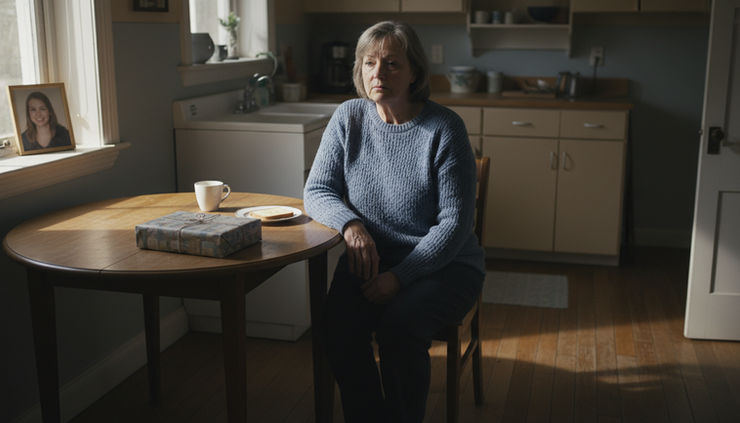
There is no clear ending to this kind of grief.
Most forms of grief have markers. A funeral. A final visit. A last conversation. A moment when the world recognises that something has ended.
Alienated parents often do not get that.
Their child is still alive. Still growing. Still having birthdays. Still learning new things. Still passing milestones. The parent may know a school year has started, a tooth has fallen out, exams are coming, a favourite song has changed, or a birthday cake will be cut somewhere they are not welcome.
The loss keeps moving.
That is what makes it so hard to explain. The parent is not grieving someone who has died. They are grieving a living relationship that has been broken, distorted, or placed beyond reach.
There is no final goodbye. There is no clear point where hope is meant to stop.
Instead, the mind loops through questions:
Will they call?
Do they still think of me?
What have they been told?
Do they remember how close we were?
If I stop trying, will they think I gave up?
If I keep trying, will I make things worse?
This uncertainty can be relentless. It keeps the heart alert. It turns ordinary days into reminders. A school uniform in a shop window, a toy aisle, a family laughing in a café, a song from the car radio, all of it can become sharp without warning.
The grief is not dramatic because the parent wants attention. It is intense because the loss never fully settles.
People often misunderstand the fight to stay connected.
From the outside, persistence can look messy.
A parent who keeps sending birthday cards may be told they are refusing to accept reality. A parent who raises concerns may be called bitter. A parent who talks about what happened may be seen as stuck in the past.
Then, if that same parent becomes exhausted and stops reaching out, the judgement can flip.
Now they are told they abandoned the child. They did not try hard enough. They should have fought more. They should have done this, said that, gone back to court, stayed calmer, been louder, been quieter.
It can become an impossible standard.
Keep trying and you may be judged as obsessed. Stop trying and you may be judged as uncaring.
That contradiction is one of the cruellest parts of alienation. It places a parent in a double bind where every choice can be used against them.
People who have never experienced this may imagine the situation as a normal family conflict. They may picture two adults who simply need to communicate better, or a child who has chosen one side after ordinary disagreements.
Sometimes family breakdown is complicated. Sometimes children need space for valid reasons. Not every estrangement is alienation, and not every rejected parent is innocent of harm.
But where a loving and safe parent has been pushed out, misrepresented, or made emotionally unsafe in the child’s mind, the pain is very different from a normal falling out. The parent is not only missing contact. They are watching the meaning of the relationship change in ways they cannot correct.
That can feel unbearable.

Moving on can feel like confirming the worst story.
For many alienated parents, “moving on” does not sound like healing. It sounds like betrayal.
It can feel like proving the story they fear their child has heard:
They stopped caring.
That fear can shape every decision.
A parent may keep writing messages they never know are read. They may save presents in a cupboard. They may mark birthdays privately. They may keep photographs on the wall, even when looking at them hurts. They may speak about the child in the present tense because, emotionally, the child is still part of their daily life.
These acts are easy to misunderstand.
They are not always signs that the parent cannot function. They may be signs of attachment, loyalty, and love. The parent is trying to leave evidence that they remained present, even when access was denied or rejected.
A birthday card can become more than a card. It can become a message to the future.
“I remembered.”
“I was still here.”
“You mattered every year.”
This matters because many alienated parents live with the terror that silence will be used as proof. If they stop sending messages, will the child one day be told, “See, they gave up”? If they stop asking, will that become the final piece of the false story?
So they keep a thread alive, even if it is thin. Even if it hurts. Even if no one else understands.
The alienated parent still has to live.
There is a painful truth here. The grief may not end, but the parent still has a life to live.
Bills still need paying. Bodies still need sleep. Friends still need answering. Other children, partners, parents, work, health, pets, and daily responsibilities do not pause because the heart is broken.
This is where the phrase “move on” fails most.
What many parents need is not pressure to forget. They need support to keep living without shutting down the love.
That can look like:
finding a counsellor or support group that understands complex family loss
setting routines around birthdays and holidays so the pain has somewhere to go
keeping records of appropriate attempts at contact, especially where legal advice suggests this
choosing trusted people who can listen without giving shallow advice
taking breaks from conflict when the body and mind are overwhelmed
protecting sleep, food, movement, and medical care
allowing moments of happiness without guilt
This article is for general information and emotional support. It is not a substitute for legal, medical, or therapeutic advice. In difficult family situations, proper professional guidance can matter.
Healing may include boundaries. It may include stepping back from constant court battles. It may include deciding not to send another message for a while because each silence feels like fresh rejection. It may include refusing to talk about the situation with people who only judge.
None of that means the child has been forgotten.
A parent can rest and still love their child. A parent can laugh and still miss them. A parent can build a stable life and still keep a place for reconciliation.
Hope can be both necessary and painful.
Hope is complicated for an alienated parent.
Without hope, the loss can feel too final. With hope, every day can carry the ache of waiting.
The phone might ring. A message might arrive. A mutual relative might say the child asked a question. A birthday might bring contact this year. A child who once rejected the parent might grow older, gain distance, and begin to wonder whether the story they were given was complete.
These things do happen in some families. Not always. Not on a predictable timeline. Not because a parent suffered perfectly or waited in exactly the right way.
But the possibility is enough to keep many parents emotionally alert.
That hope can be misunderstood as denial. Sometimes it is survival. It gives the parent a reason to stay steady. It helps them imagine that the way they live now may matter later.
A child who returns, even with anger or confusion, may need to find a parent who has not been destroyed by the years apart. They may need someone capable of listening. Someone who can tolerate hard questions. Someone who can say, “I loved you the whole time,” without placing the full weight of adult pain onto the child.
That is a hard thing to prepare for. It asks the parent to carry grief without allowing grief to consume everything.

Love does not switch off because contact stops.
A parent’s bond with a child is not built only from the current week’s contact.
It is built from nights without sleep, school runs, stories read aloud, favourite snacks, small hands in bigger hands, worries over fevers, first words, ordinary jokes, and thousands of tiny moments no court order or argument can erase.
When contact disappears, those memories do not disappear with it.
That is why the expectation to “get over it” can feel so brutal. It treats the relationship as if it were optional. It treats the parent’s pain as an inconvenience. It ignores the depth of attachment that formed long before the separation.
To love a child from a distance is not the same as refusing to accept life. It can be an act of faithfulness.
It means the parent keeps a steady internal message:
“You are still my child.”
“I am still your parent.”
“The door is not locked.”
This does not mean tolerating abuse, ignoring court orders, or sacrificing mental health. It means refusing to let absence rewrite love into indifference.
Moving forward is not the same as moving on.
There is a better phrase than “move on”.
Move forward.
Moving forward allows room for truth. It accepts that life cannot freeze completely, even when something precious is missing. It allows the parent to seek peace, make plans, care for their health, and experience joy. It also allows them to keep loving their child.
Moving forward might mean creating a memory box. It might mean writing letters that are saved rather than sent. It might mean lighting a candle on a birthday, then doing something kind for the body afterwards. It might mean making the home warm and calm in case the child ever returns.
It might also mean grieving honestly.
There will be days when the parent copes well. There will be days when a small reminder breaks them open. There will be anger, guilt, longing, numbness, and moments of strange normality. None of that makes the love less real.
The goal is not to become untouched by the loss. The goal is to avoid being swallowed by it.
A parent can carry grief and still become stronger. They can miss their child and still be present for others. They can leave the door open without standing in the doorway every minute of the day.

A better answer to a painful question.
“Why don’t alienated parents just move on?” is the wrong question.
A better question is, “How can a parent keep living while carrying a loss that has no clear ending?”
That question has more compassion in it. It recognises the pain without demanding that the parent erase the child from their heart. It leaves space for healing, boundaries, and hope.
No loving parent simply stops being a parent because contact disappears.
Sometimes moving forward means waking up, going to work, answering messages, caring for the body, and finding small reasons to keep going. Sometimes it means sending the card. Sometimes it means not sending it this year. Sometimes it means crying in the car, then walking back into the house and making dinner.
And sometimes it means becoming the kind of steady, whole, loving person a child may one day come looking for.
Not because the grief vanished.
Because love stayed.
In need of help or support?
If you are an alienated parent reading this article and feel you are in need of help and support then please make sure to join PAPA today by signing up here on our website.
This will give you access to our community support forum as well as our Resource Centre, which includes downloadable guides and on-demand courses to help through the process of being alienated and regaining contact with your children.
We also have our Facebook support group that you can join here.
Our Facebook support group has several dedicated chat rooms where you can get immediate support.
If you are a member of PAPA you can also send us a message here on the website and we will try to get back to you as soon as possible but please bear in mind, we have hundreds of messages weekly so it may take us a while to get back to you.
We are currently prioritising PAPA Plus members due to high demand.
Regardless of circumstance you are not alone and at PAPA we are here to support you.
Become a PAPA Ambassador.
If you like our resources, articles and support networks and agree with what we stand for then why not get involved and help us push PAPA further by joining our Ambassador Program?
We would love for you to join us and help spread awareness for parental alienation and all of the dynamics involved so that we can continue to help parents and children towards a better future.
Our Ambassador Program allows you to grow your involvement with the cause by earning points on your membership.
To earn points we have created rewards for actions such as completing one of our courses, booking a case review, or ordering supply.
We will be adding new rewards and actions to our Ambassador Program as we continue to grow our awareness efforts.
We want our members to feel rewarded for their support as we continue to look for new ways to improve the lives of those impacted by parental alienation.
You can also become a PAPA Plus member, which will give you exclusive access to even more help and resources.
Each PAPA Plus membership makes a huge difference to the cause as it really helps us to improve our services and our awareness campaigns.
Proceeds from memberships and supply allow us to push the cause much further towards raising awareness and improving our services and resources so that we can continue to help more and more parents and children.
Thank you for reading and for your continued support of PAPA and our mission to end parental alienation.


The mothers (and the fathers?) of children murdered by Ian Brady and Myra Hindley were tortured, life-long, by the withholding by B and H of just where their children were buried on the moors. The losses of children in the current processes place the alienated parent in facing and coping with the "living death" of their child(ren). Inevitably, that places the child(ren) in the same position as their parent; and we wonder at the chaos prevalent in our society!