


The Cost of Constant Interrogation After Contact.

For some children, seeing a parent is only half the experience. The other half begins when they get home.

“What did Mum say?”
“Who was there?”
“Did Dad ask about me?”
“Were you safe?”
“Did anything happen?”
On their own, these questions can sound ordinary. A parent may ask because they care, because they are anxious, or because they want to understand their child’s world. But when questioning happens after every visit, in the same tense pattern, ordinary contact can start to feel like something the child must report on.
That is where the harm can begin.
Children need space to have their own relationship with each parent. They also need to feel safe to talk about genuine worries. The line between healthy curiosity and pressure is not always obvious, especially in separated families where trust may be low. The question is not whether a parent should ever ask about contact. The question is whether the child starts to feel watched, tested or responsible for managing adult feelings.
This article looks at how repeated questioning after contact can create anxiety, shape a child’s perceptions and turn ordinary parenting time into something they feel pressured to report on.
If you're an alienated parent or family member and need help with your situation then you should join PAPA today.
At PAPA we have several free to use support spaces, as well as several additional resources available to our Plus members, such as courses, PAPA AI, 1-2-1 help and workshops on family law and mental health.
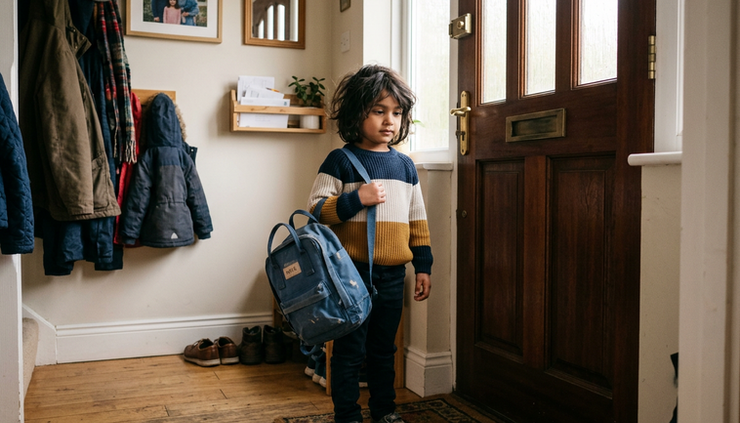
Contact can start to feel like a test.
A child should be able to spend time with a parent without feeling responsible for gathering evidence.
If they know a round of questions is coming later, they may start to monitor the visit while it is happening. Instead of enjoying dinner, building Lego, watching a film or playing in the park, they begin to make mental notes.
Who was there?
What was said?
Was anyone late?
Did Mum look annoyed?
Did Dad mention court?
Did anything happen that might be “important”?
That changes the experience itself. The child is no longer simply being a child. They become an observer, almost like a witness.
This is especially difficult when the questions are detailed, repeated or emotionally loaded. A parent may believe they are being careful, but the child may hear something different. They may hear:
I need to remember everything.
I need to give the right answer.
I might upset someone if I enjoyed myself.
I am supposed to find something wrong.
This does not mean every question is harmful. Asking “Did you have a nice time?” is normal. Asking whether they have eaten, slept well or have their school bag is part of everyday parenting.
The concern grows when questioning becomes a routine interrogation after contact. The child may dread the journey home because they know what comes next. They may become quiet, defensive or unusually detailed. They may give short answers because any detail seems to invite more questions.
A child’s contact time should not feel like homework they have to hand in afterwards.
One sign that questioning has become harmful is when the child starts changing their behaviour during contact because of what they expect afterwards. They may avoid affection, hesitate before laughing, refuse to talk freely, or seem torn between enjoying the moment and protecting themselves from questions later.
The cost is not just stress after contact. The cost is that contact itself becomes contaminated by anticipation.
Children notice which answers get a reaction.
Children are highly sensitive to adult emotion. They notice tone, silence, facial expressions and small changes in mood.
If a child says, “I had a great time,” and the room becomes tense, they will feel it.
If they say, “Dad was a bit cross,” and suddenly receive attention, comfort and follow-up questions, they will feel that too.
Over time, a child may learn which version of events seems safer to share. That does not always involve deliberate coaching. A parent may never say, “Tell me something bad.” The pressure can still be communicated through repeated questioning, a disappointed face, a sharp intake of breath, or a sudden burst of warmth when the child reports something negative.
This creates a painful emotional puzzle for the child.
They may love both parents. They may want to enjoy contact. They may also want to protect the parent they return to. If one parent seems hurt by the child’s happiness with the other, the child may begin to hide that happiness.
That can sound like:
“I can’t remember.”
“It was boring.”
“We didn’t do much.”
“I don’t want to talk about it.”
Sometimes those answers are taken as proof that something is wrong. In reality, the child may simply be trying to stay safe between two emotional climates.
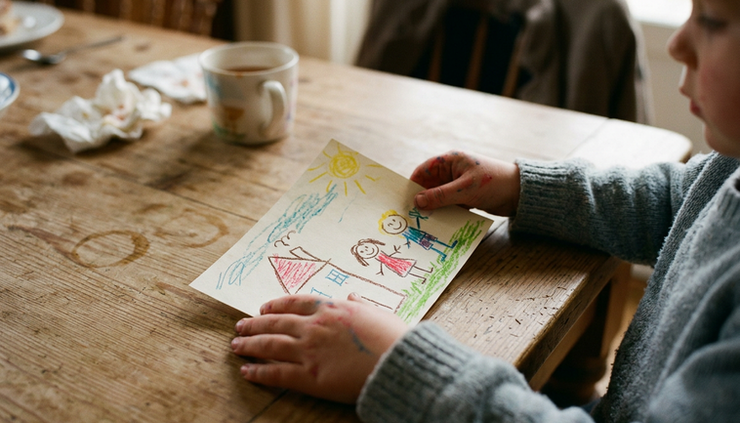
Repeated questioning can also affect memory. Children may start to doubt what happened. They may wonder whether a normal moment was actually serious because an adult keeps returning to it.
A late meal becomes a concern.
A parent saying “no” becomes a possible issue.
A tired voice becomes “anger”.
A brief disagreement becomes something to analyse.
When children are asked to review contact like this, normal family life can begin to feel suspicious. They may start looking for danger even in safe situations. That is a heavy burden for a child to carry.
It can also feed wider patterns seen in parental alienation, where a child becomes caught in loyalty conflicts and feels pushed, directly or indirectly, to reject or distrust one parent. Not every case of harmful questioning is part of that pattern, but the emotional pressure can look similar from the child’s point of view.
Normal parenting can begin to feel unsafe.
Children need ordinary parenting from both households. That includes care, warmth, fun and comfort. It also includes limits.
A parent may say no to another hour on the Xbox. They may ask the child to tidy their room. They may serve a meal the child does not like. They may remind them to brush their teeth, finish homework or speak respectfully.
These are normal parts of family life.
The problem comes when a child knows every ordinary limit might be examined later. They may start to experience routine parenting as risky because it could become part of a report.
For example, a child returns home and is asked:
“Did Mum shout?”
“Did Dad make you do anything?”
“Were you upset?”
“Did they leave you alone?”
“Did they talk about me?”
Some of these questions may be valid if there is a real safeguarding concern. But when they are asked every time, without a specific reason, the child may begin to view normal moments through a threat lens.
A parent saying “You need to come off the game now” may become something the child worries about repeating.
A child may think, “If I say Dad told me off, Mum will be upset. If I do not say it, I am hiding something.”
That is too much responsibility.
Children should not have to judge adult behaviour, collect information or decide which parent deserves the truth. They are not investigators. They are not messengers. They are not witnesses for one household against the other.
They also should not feel that contact must be either “good” or “bad”. Most family time is mixed. A visit can include laughter, boredom, a small disagreement, a nice meal, a tired parent and a happy goodbye. That is normal.
When adults need contact to fit a fixed story, children lose permission to experience it honestly.

Safeguarding is different from repeated searching.
There is a vital distinction between giving a child a safe space to speak and repeatedly searching for something negative.
Children must always be able to disclose abuse, harm, neglect or genuine fear. If a child raises a safeguarding concern, it should be listened to, recorded carefully and handled through the right channels. That may mean seeking legal advice, contacting the appropriate safeguarding services, or raising the matter properly within family court proceedings.
This article is general information, not legal advice. Serious concerns should be discussed with a qualified professional.
A safe space sounds calm, open and child-led. It does not pressure the child to produce a particular answer.
It might sound like:
“Did you have a good time?”
“I’m glad you’re home.”
“You can always talk to me if anything worries you.”
“I won’t be cross if you enjoyed yourself.”
“If something ever makes you feel unsafe, you can tell me.”
Then the adult stops and allows the child to decide what to share.
By contrast, harmful questioning often has a searching quality. It circles back. It asks the same thing in different ways. It treats neutral answers as incomplete.
A child says, “It was fine.”
The adult asks, “But did anything happen?”
The child says, “No.”
The adult asks, “Are you sure? You look quiet.”
The child says, “I’m just tired.”
The adult asks, “Did they say something to you?”
This kind of pattern can feel like pressure, even when the adult believes they are being protective. The child may learn that “fine” is not enough. They may feel they must offer detail to end the questioning.
A healthier approach is to keep the door open without standing in the doorway.
That means:
Ask broad, calm questions.
Accept ordinary answers.
Avoid pressing for negatives.
Let the child enjoy positive experiences without guilt.
Respond seriously if they raise a clear worry.
Keep adult fears away from the child where possible.
The aim is not silence. The aim is safety.
What to do if you suspect interrogation after contact.
It can be frightening to sense that a child is anxious, guarded or rehearsed after contact. It can also be tempting to ask more questions to work out what is happening. That may be understandable, but it can add to the child’s pressure.
A better first step is to regulate the atmosphere around the child.
Keep the return home calm. Offer food, rest, play or ordinary routine. Let the child settle before expecting conversation. Some children talk best in the car, while drawing, at bedtime or during a walk. Others need time.
If they share something worrying, listen without showing shock. Thank them for telling you. Use simple language. Avoid putting words in their mouth.
For example:
“Thank you for telling me.”
“What happened next?”
“How did that make you feel?”
“Is there anything you need right now?”
Try not to ask leading questions such as, “Did Mum make you scared?” or “Did Dad tell you not to tell me?” Leading questions can confuse a child and may affect how their words are understood later.
If there are repeated concerns, keep a clear record. Write down dates, times and the child’s words as accurately as possible. Separate what the child said from your interpretation. This matters if professionals become involved.
At the same time, protect the child from adult conflict. Do not ask them to carry messages. Do not ask them to report on the other parent’s private life. Do not make them responsible for proving whether contact is working.
The child’s role is to be a child. The adults’ role is to handle adult concerns through adult channels.

If this is happening in your case, getting guidance can help you avoid reacting in ways that make things harder.
PAPA Plus gives members ongoing one-to-one case support, specialist resources, courses, PAPA AI and practical guidance around difficult contact dynamics, alienation concerns and family court proceedings.
The goal is not to silence children. The goal is to stop them being trapped between two households.
Questioning after contact becomes harmful when it stops being a gentle invitation to talk and becomes a test the child feels they must pass. A child should be free to enjoy time with a parent, raise genuine worries when they need to, and come home without fear of an emotional cross-examination.
Protecting a child means listening carefully. It also means knowing when to stop asking.
In need of help or support?
If you are an alienated parent reading this article and feel you are in need of help and support then please make sure to join PAPA today by signing up here on our website.
This will give you access to our community support forum as well as our Resource Centre, which includes downloadable guides and on-demand courses to help through the process of being alienated and regaining contact with your children.
We also have our Facebook support group that you can join here.
Our Facebook support group has several dedicated chat rooms where you can get immediate support.
If you are a member of PAPA you can also send us a message here on the website and we will try to get back to you as soon as possible but please bear in mind, we have hundreds of messages weekly so it may take us a while to get back to you.
We are currently prioritising PAPA Plus members due to high demand.
Regardless of circumstance you are not alone and at PAPA we are here to support you.
Become a PAPA Ambassador
If you like our resources, articles and support networks and agree with what we stand for then why not get involved and help us push PAPA further by joining our Ambassador Program?
We would love for you to join us and help spread awareness for parental alienation and all of the dynamics involved so that we can continue to help parents and children towards a better future.
Our Ambassador Program allows you to grow your involvement with the cause by earning points on your membership.
To earn points we have created rewards for actions such as completing one of our courses, booking a case review, or ordering supply.
We will be adding new rewards and actions to our Ambassador Program as we continue to grow our awareness efforts.
We want our members to feel rewarded for their support as we continue to look for new ways to improve the lives of those impacted by parental alienation.
You can also become a PAPA Plus member, which will give you exclusive access to even more help and resources.
Each PAPA Plus membership makes a huge difference to the cause as it really helps us to improve our services and our awareness campaigns.
Proceeds from memberships and supply allow us to push the cause much further towards raising awareness and improving our services and resources so that we can continue to help more and more parents and children.
Thank you for reading and for your continued support of PAPA and our mission to end parental alienation.


Learning the basics of router configuration can help users approach network settings with greater confidence. Information about access procedures and wireless options can be useful for routine maintenance. People searching for 1.0.0.0.1 can benefit from practical guidance that keeps the configuration process clear and manageable.